
Blog
Halal vs Zabihah vs Regular Meat: What’s the Difference?

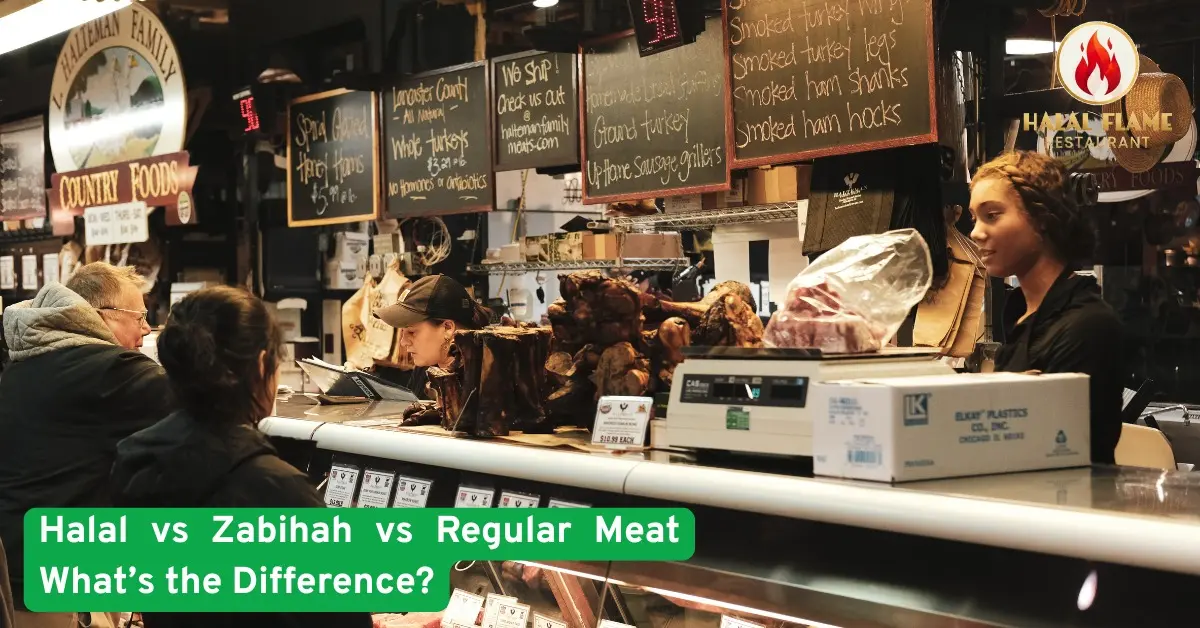
Choosing the right food for your family shouldn’t feel like a guessing game, yet for many, the labels on meat packaging create more confusion than clarity. Halal vs Zabihah vs Regular Meat: What’s the Difference? This question is vital for consumers who prioritize spiritual purity, ethical sourcing, and physical health. Whether you are a dedicated follower of Islamic dietary laws or a conscious eater looking for cleaner alternatives, understanding these distinctions ensures your plate aligns with your values. Research indicates that the US Halal food market is experiencing a massive surge, growing at nearly 15% annually, as consumers increasingly seek out transparency and humane animal treatment over conventional factory-farmed options.
Deciphering the Labels: Understanding the Core Differences
To the uninitiated, “Halal” and “Zabihah” might seem like interchangeable terms, but in the nuanced world of Islamic dietary laws, they carry distinct weights. The term Halal is an Arabic word meaning “permissible.” In a broad sense, it covers everything from lifestyle choices to finance. When applied to food, it identifies what is allowed for consumption according to the Quran.
However, the modern meat industry often uses these terms with varying degrees of strictness. It is important to look beyond the sticker on the package to understand the journey from farm to table. Here is how the categories generally break down in the American market:
- Halal Meat: This is a general category. In the USA, meat labeled simply “Halal” may sometimes refer to products that do not contain pork or alcohol, or meat that has been slaughtered using mechanical methods (machine-cut) while a recorded blessing is played.
- Zabihah Meat: This refers specifically to the method of slaughter. For meat to be truly Zabihah, it must be hand-slaughtered by a sane Muslim who invokes the name of God (Tasmiya) at the moment of sacrifice.
- Regular Meat: Also known as conventional meat, this follows standard USDA guidelines. While safe for general consumption, it does not account for religious invocations, specific slaughterer requirements, or the complete drainage of blood.
The Ritual of Zabihah: More Than Just a Cut
When we look deeper into Halal vs Zabihah vs Regular Meat: What’s the Difference?, we find that the Zabihah method is deeply rooted in compassion and hygiene. The process requires a swift, deep incision with a razor-sharp knife to the throat, severing the jugular veins, carotid arteries, and windpipe.
This specific technique ensures two vital things: the animal loses consciousness almost instantaneously, minimizing pain, and the blood is drained completely from the body. In conventional “regular” meat processing, animals are often stunned using captive bolts or electricity. If the stunning process is too forceful, the animal may die before the actual slaughter, which would disqualify the meat from being Halal in many traditional views.
Why Quality and Ethics Matter
The distinction isn’t just about ritual; it’s about the quality of the meat on your fork. The requirement for full blood drainage in Zabihah practices is a significant health benefit. Blood can carry toxins, uric acid, and bacteria; by removing it entirely, the meat stays fresher for longer and often has a leaner, cleaner taste profile.
Furthermore, the “Tayyib” (wholesome) aspect of Halal requires that the animal be raised in a stress-free environment, fed a natural diet, and treated with respect. This holistic approach to animal welfare is why many non-Muslims are increasingly opting for these products over regular factory-farmed alternatives that prioritize speed over quality.
Navigating the American Grocery Aisle
In the United States, the debate over Halal vs Zabihah vs Regular Meat: What’s the Difference? has become a hot topic due to “mechanical slaughter.” Large-scale poultry plants often use automated blades to keep up with high demand. While some modern certifying bodies accept this as Halal, many traditionalists and expert scholars insist that only manual, hand-slaughtered (Zabihah) meat fulfills the spiritual requirement. For the consumer, this means looking for specific certifications to ensure the highest standards of Expertise, Authoritativeness, and Trustworthiness (E-A-T) are met.
Frequently Asked Questions (FAQs)
1-Is all Halal meat considered Zabihah?
Not necessarily. While all Zabihah is Halal, not all meat labeled “Halal” in the US is hand-slaughtered (Zabihah). Some may be machine-slaughtered.
2-Does regular meat contain hormones that Halal meat doesn’t?
Not always, but many Halal and Zabihah providers prioritize “Tayyib” (pure) standards, which often involve organic, hormone-free, and antibiotic-free farming.
3-Can I find Zabihah meat in standard supermarkets?
It is becoming more common, but specialty providers and local butchers remain the most reliable sources for strictly hand-slaughtered meat.
4-Why does Zabihah meat sometimes cost more?
The manual labor involved in hand-slaughtering and the high standards for animal welfare typically incur higher production costs than mass-produced regular meat.
5-Is there a taste difference?
Many consumers report that Zabihah meat has a “brighter” and less metallic flavor because the blood (which contains iron and toxins) has been fully removed.
Why Choose Halal Flame?
At Halal Flame, we believe that transparency is the most important ingredient in any meal. We understand that your dietary choices are an extension of your faith and your commitment to health. That is why we go above and beyond to ensure our sourcing meets the strictest Zabihah standards. We don’t just sell meat; we provide peace of mind. By partnering with farms that prioritize animal welfare and traditional hand-slaughtering, Halal Flame ensures that every bite is as ethical as it is delicious. Our commitment to the “hand-slaughtered” promise is what sets us apart in a crowded market.
Make the Switch
The choice between Halal vs Zabihah vs Regular Meat: What’s the Difference? ultimately comes down to your personal standards for purity and ethics. While regular meat is the industrial norm, Zabihah represents a gold standard of compassion, cleanliness, and spiritual integrity. By choosing meat that is harvested with intention, you are choosing a healthier lifestyle for your family and a more humane world for the animals.
Ready to elevate your kitchen with meat you can trust? Visit Halal Flame today to explore our premium selection of hand-slaughtered, high-quality meats delivered straight to your door. Experience the difference that true Zabihah quality brings to your table!